
What Is the Future of EdTech?
Exploring the Emerging Trends and Technologies Shaping the Future of Education

Technology has made a huge impact on people's lives already. Especially when it comes to education. At present the percentage of students who are sitting in a physical class room and studying is very low when compared to the students who attend classes online, who access digital learning materials, and watch recorded lessons. These changes have made modern education important.
But even though the current education style is still developing. Day by day new technology methods are being introduced and developed. Artificial intelligence, personalised learning platforms and interactive digital content are creating new possibilities for students and teachers.
So, what is the future of EdTech, and how could it change education in the coming years?
What Is EdTech?

Simply put, EdTech or Educational Technology means using technology for education. It goes through simple tasks such as digital presentations to advance tasks such as deliver and manage complete courses.
Common examples include:
- Online learning platforms
- Learning Management Systems (LMS)
- Virtual classrooms
- Educational apps
- Digital learning materials
- Online assessments
- Artificial intelligence tools
- Interactive learning software
- Virtual and augmented reality
Many of these technologies are already being used by schools, universities, training centres and other education providers.
The future will be less about simply introducing new technology and more about finding useful ways to apply it to education.
More Personalised Learning
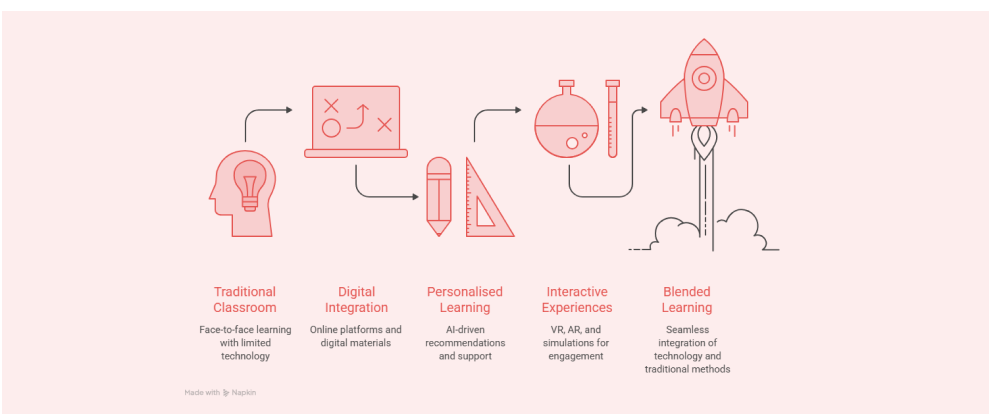
When it comes to traditional classroom learning teachers will mostly work with the needs of an entire student group. Even though some students need more help than others. But technology helps students individually based on the standard of each student.
A learning platform could look at a student's progress and recommend:
- Extra practice questions
- Revision materials
- Videos explaining difficult topics
- Additional activities
- More advanced content for students who are ready
This type of personalised learning can help students spend more time on the areas where they need support instead of following exactly the same learning path as everyone else.
Artificial Intelligence in Education
When it comes to the future of EdTech, artificial intelligence plays a major role. Even currently AI tools help students with many tasks throughout their learning process.
With the improvement of these tools, the possibility that students can make mistakes is much lower, as those tools can identify mistakes immediately and give students what is correct in a very simple and understandable way.
Teachers may also use AI to support everyday tasks such as:
- Creating practice questions
- Preparing lesson materials
- Summarising information
- Developing learning activities
- Identifying areas where students need additional support
Mobile Learning Will Become More Important
Currently a smartphone is one of the most popular and used methods by students. With covid the usage of learning via smartphone increased. Currently, mobile learning is used by almost 90% of students around the world.
With the usage of mobile phones and the technology development more learning activities may come across. This can make learning easier to access for people who do not have regular access to a computer.
Using mobile phones for studies has increased significantly among students in Sri Lanka.
However, education providers also need to consider:
- Mobile-friendly course platforms
- Data usage
- Internet connectivity
- Screen size and usability
- Access to affordable devices
Making a course available online is not enough. It should also be easy for students to use.
More Interactive Learning

The growth of Interactive learning can be considered one of the important changes. While traditional digital learning can involve reading books online, newer tools help students to actively take part in the learning process.
For example, students may be able to:
- Complete interactive exercises
- Use simulations
- Explore virtual environments
- Change variables and see different results.
- Practise skills in a digital environment.
- Take part in online activities with other learners.
This process is useful for the students who need to understand how things actually work rather than simply remembering lessons.
Virtual Reality and Augmented Reality
Virtual Reality (VR) and Augmented Reality (AR) are also being explored for educational purposes.
VR can create a computer-generated environment that students can explore. AR can add digital information to the real world through a phone, tablet or other device.
These technologies may have useful applications in areas such as:
- Medicine
- Engineering
- Science
- Technical training
- Geography
- History
For example, instead of only reading about a particular environment or process, students could explore a digital version of it.
However, VR and AR are likely to develop gradually because they can require specialised equipment and additional investment.
Smarter Assessments
Assessment is another area where EdTech can make a difference.
Traditional assessments usually take place at specific points during a course. Digital learning platforms can collect information about a student's progress throughout the learning process.
This can help teachers understand:
- Which topics students have completed
- Where students are making mistakes
- Which areas require more practice
- How students are progressing over time
This information can help teachers provide support before a student falls too far behind.
Digital assessments can therefore become more than a way of giving marks. They can also become part of the learning process.
What Is the Future of Technology in Education?
When we talk about the future of technology in education, we should always remember that it will not rely on only one technology that changes everything.
Instead, different technologies will work together.
Education may increasingly use:
- Artificial intelligence
- Personalised learning
- Mobile learning
- Digital assessments
- Learning analytics
- Interactive content
- Virtual and augmented reality
- Online collaboration tools
The important point is how these tools are used.
Technology should always support a clear learning goal. We should never think that a complicated technology will be automatically better than a simple one. If it's difficult for both students and teachers, it is useless. It will make the problem worse than solving it.
How Could EdTech Change the Role of Teachers?
The growth of EdTech does not mean teachers will become less important. Their role may simply change as technology takes care of some routine tasks.
Teachers may have more opportunities to focus on:
- Explaining difficult concepts
- Supporting individual students
- Encouraging discussion
- Developing critical thinking
- Helping students solve problems
- Guiding students in using digital resources
Not only students, but even teachers need to develop their own digital skills. Teachers should have a complete idea of how to choose and use technology. That's an important part in teaching.
What Does the Future of EdTech Mean for Sri Lanka?
EdTeach has done a great job in education in Sri Lanka. It has improved access to education. With distance learning students can stay from anytime and from anywhere. This method has helped even adults to pursue higher studies with the responsibilities they have.
At the same time, some challenges need attention. The future development of EdTech in Sri Lanka will depend on factors such as:
- Reliable internet access
- Affordable digital devices
- Digital skills among teachers and students
- Good-quality online learning content
- Technical support
- User-friendly learning platforms
Access is only one part of the issue. Online education also needs good teaching, well-designed content, and proper support for students.
Will Technology Replace Traditional Education?
Technology can not completely replace the ambiance and education system that a traditional classroom has. We can say that technology is a blend of classroom teaching and digital learning.
A course could include:
- Face-to-face lessons
- Online classes
- Recorded content
- Digital activities
- Online assessments
- Classroom discussions
The approaches that have to be taken may vary according to different subjects. For some courses, it may need face-to-face learning, and others may be ok to deliver effectively through online platforms.
The future is therefore not necessarily about choosing between traditional education and technology. It is about finding the right balance between the two.
What Skills Will Students Need?
As per the current technology used in education, having basic computer skills will not be enough for a student.
Important skills may include:
- Digital literacy
- Critical thinking
- Problem-solving
- Communication
- Creativity
- Adaptability
- Information literacy
- Responsible use of AI
Students will always have to make sure that the information provided online is reliable.
A student's knowledge will not rely on the information they have. Students still need to think carefully, ask questions, and understand what they are learning.
The Future of EdTech
The future of EdTech will always focus on making learning more flexible, personalised and accessible. Students may have more ways to learn, while teachers may have better tools to understand progress and provide support.
Artificial intelligence, mobile learning, interactive content and other technologies will continue to develop. However, technology alone cannot create a good education experience.
The most useful EdTech solutions will be those that solve real problems and help students learn more effectively. Teachers, learning content and student support will continue to be just as important as the technology itself.